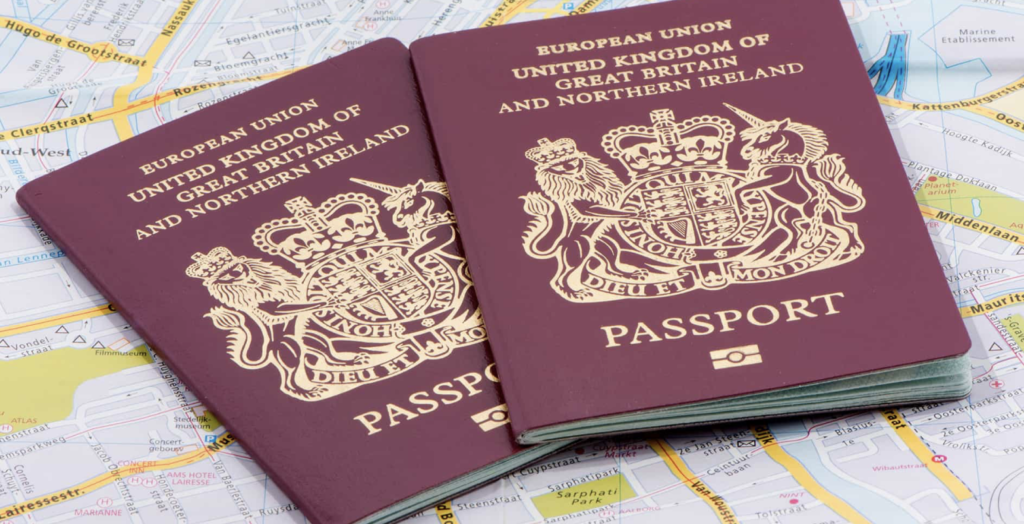
Key Takeaways
- The UK allows dual (and multiple) citizenship. Becoming British does not require you to give up your existing nationality, and British citizens are not required to renounce UK citizenship to take a foreign one.
- There is no limit on how many nationalities you can hold under UK law. You can be a dual, triple or quadruple citizen.
- Whether you can keep your original nationality is decided by your other country, not by the UK.
- There is no separate “dual citizenship” application. You acquire British citizenship through the normal route, usually naturalisation, and simply keep your other passport.
- As of April 2026, the adult naturalisation fee is £1,709, plus a £130 citizenship ceremony fee.
- When entering and leaving the UK you must use your British passport.
Dual citizenship in the United Kingdom is a hot topic for those who wish to hold two passports and enjoy the benefits of each country. Dual nationality in the UK enables an individual to possess citizenship from two different countries, while being entitled to all the benefits and obligations of either nation they belong to.
However, navigating the complex legal requirements and documentation needed to become a British dual citizen can be challenging. Seeking the guidance of expert immigration lawyers in London, such as Sterling Law, can help you avoid application rejection and maximise your chances for success.
Our team of highly qualified immigration solicitors has vast experience in helping individuals tackle the intricate process of obtaining UK dual citizenship. Our lawyers can provide comprehensive assistance in your pursuit of British citizenship, while also ensuring that your home country legally recognises your status as a UK dual-national.
Table of contents
- What Is Dual Citizenship?
- How Can You Benefit from Dual Citizenship?
- Does Dual Citizenship Have Any Disadvantages?
- What Are the UK Travel Rules for Dual Citizens?
- How Many Passports Can You Have?
- Which Countries Allow Dual Citizenship?
- Can You Have Dual Citizenship in the US and UK?
- What Are the Eligibility Requirements for Dual Citizenship in the UK?
- How Much Does Dual Citizenship Cost in the UK in 2026?
- How to Apply for Dual Citizenship in the UK?
- How Can We Help?
- FAQ
What Is Dual Citizenship?
Dual citizenship is a situation when an individual possesses two passports and holds citizenship in two separate countries simultaneously. This is also referred to as double or dual nationality.
Each country establishes its own rules regarding the possibility of holding two citizenships at once, and dual nationality is a complex aspect of nationality law.
Many foreigners would like to know, “Does the UK allow dual citizenship?” Fortunately, the United Kingdom allows dual citizenship. When an individual becomes a British citizen, they can still preserve their original citizenship. Similarly, British nationals who are seeking foreign citizenship are not required to give up their UK citizenship. However, both the United Kingdom and the person’s home country must permit dual citizenship for that person to securely become a British dual national, because holding multiple citizenships is not legal everywhere.
If a person wishes to acquire British dual nationality, the procedure involves filing an application for naturalisation as a British citizen, since there is no standalone application for obtaining UK dual citizenship. When applying for citizenship, individuals are free to retain their original citizenship status from their native country.
How Can You Benefit from Dual Citizenship?
Having dual nationality offers many benefits, including access to the privileges and rights that come with both citizenships. The outstanding advantage of dual citizenship is the right to reside and travel within both countries without any legal limitations.
British dual nationals are entitled to all the same rights as other British citizens, such as the ability to live, study and work in the United Kingdom indefinitely. You can also apply for a British passport to travel in and out of the country without restriction, vote in all UK elections, stand for election, and access public funds and the National Health Service.
Does Dual Citizenship Have Any Disadvantages?
Apart from benefits, dual nationality also implies holding the obligations of both countries. For instance, you may be liable for double taxation, and you must abide by the laws of either nation in which you hold citizenship.
Dual citizenship can also become a serious concern for those who wish to serve in both of their countries’ militaries. This can lead to conflicting loyalties and obligations, making it difficult to fulfil the requirements of both services simultaneously. During times of conflict or war, individuals with dual citizenship may have to choose which military they will serve in.
Conflicts of interest can also arise when an individual’s loyalties are divided between two countries. It is important to note that seeking diplomatic assistance from one government while you are physically in the other is not always possible. For instance, if you are both a British and a Japanese citizen, you will not be able to turn to the UK for diplomatic help while you are in Japan.
What Are the UK Travel Rules for Dual Citizens?
When you travel to and from the United Kingdom you must use your British passport. UK Border Force expects British citizens to enter and leave on a British passport, not on a foreign one, even if you also hold that other nationality. Your other country may apply the same rule in reverse and require you to use its passport at its own border, so in practice many dual nationals carry both passports.
How Many Passports Can You Have?
In the United Kingdom, there is no limit to the number of citizenships (and passports) a person can hold as a UK national. As such, you can be a dual, triple, and even quadruple passport holder.
Which Countries Allow Dual Citizenship?
There are many countries that allow dual citizenship, including most of the Commonwealth, the United States and much of the European Union. Some of them include:
- Australia
- Belgium
- Canada
- Denmark
- Finland
- France
- Germany
- Greece
- Hungary
- Iceland
- Ireland
- Israel
- Italy
- Luxembourg
- Mexico
- Netherlands
- New Zealand
- Norway
- Portugal
- Romania
- Spain
- Sweden
- Switzerland
- United Kingdom
- United States
This list is not complete and may change according to the immigration laws of different jurisdictions, so it is important to research the rules that apply to your own country. Some countries, by contrast, generally require you to renounce your existing citizenship when you naturalise elsewhere; these include China, India (which offers Overseas Citizen of India status rather than citizenship), Japan and Singapore. Rules also change over time: Germany, for example, removed its longstanding general restriction on dual citizenship in June 2024. If you do not know whether your country allows or prohibits multiple nationalities, consider talking to an immigration solicitor before applying for dual British citizenship.
Can You Have Dual Citizenship in the US and UK?
Unlike some countries, both the United States and the United Kingdom allow individuals to hold dual citizenship. Obtaining British–American dual nationality is an attractive option for many US citizens who wish to gain the benefits of UK citizenship without renouncing their American status.
There is no separate procedure for US and UK joint citizenship. Americans can pursue British citizenship through several pathways, including naturalisation, marriage to a British citizen, birth or descent. A significant benefit of US and UK dual citizenship is the ability to live, work, study and travel freely in both countries without the need for visas or permits. Dual citizens also gain the right to vote in both nations’ elections and to access public benefits such as the UK’s National Health Service (NHS).
However, holding American–British dual citizenship also comes with responsibilities. US tax law requires American citizens to pay tax on their worldwide income, even if they reside in another country. Additionally, dual citizens must adhere to the laws of both countries and cannot seek diplomatic assistance from the UK government while in the United States. For those considering how to obtain dual citizenship in the US and the UK, it is recommended to consult an immigration expert.
What Are the Eligibility Requirements for Dual Citizenship in the UK?
To obtain British dual citizenship, a candidate must fulfil certain eligibility requirements. Before proceeding, a person must make sure that their home country permits dual nationality and allows them to retain their original citizenship. UK dual citizenship is received through naturalisation. The eligibility conditions to naturalise as a UK citizen are as follows:
- Residing in the UK for at least five years and holding settled status. You will need to have resided in the United Kingdom for a minimum of five years and hold settled status, meaning you have permanent residency and unrestricted rights to reside and be employed in the UK.
- Passing the Life in the UK test. It is a multiple-choice test that consists of 24 questions and lasts for 45 minutes, with a pass mark of 18 correct answers (75%).
- Meeting the English language requirement. You must be able to understand and speak English fluently, which you can prove with an approved English language qualification or a degree taught in English.
- Being of good character. This means you must have a clean immigration and criminal record. The Home Office conducts a thorough background check to ensure you meet this condition.
It should be emphasised that not all countries permit you to keep your current citizenship when you apply for British citizenship. As a result, whether you must renounce your original citizenship to become a UK citizen is determined by the laws of your home country.
How Much Does Dual Citizenship Cost in the UK in 2026?
There is no separate fee for “dual” citizenship; you pay the standard cost of the British citizenship route you use. As of 8 April 2026, the main fees for adult naturalisation are set out below.
| Type of application | Home Office fee | Additional fee | Total payable |
|---|---|---|---|
| Naturalisation as a British citizen (adult) | £1,709 | Citizenship ceremony fee £130 | £1,839 |
| Registration of a child as a British citizen (under 18) | £1,000 | — | £1,000 |
Additional fees and costs
| Type of expense | Amount | Details |
|---|---|---|
| Biometric enrolment | £19.20 | Fee for submitting biometric data (fingerprints and photograph) for identity verification, paid after the application is submitted. |
| Life in the UK Test | £50 | Mandatory for most adult applicants and payable per attempt; tests knowledge of British history, culture and society. Exemptions apply by age or medical condition. |
| English Language Test | From ~£150 | Applicants may need to prove their English through an approved test. The cost depends on the provider and level required. |
For a full breakdown, see our guide to how much British citizenship costs. Unlike many visa routes, there is no priority or premium service to speed up a citizenship decision.
How to Apply for Dual Citizenship in the UK?
Becoming a British citizen for foreign nationals is typically achieved through naturalisation. Before launching into the application, it is important to assess whether you are eligible, as a crucial requirement is that you have legal permission to stay in the UK up to the point you are granted citizenship. The step-by-step process is set out below.
| Stage | Description |
|---|---|
| Eligibility assessment | Confirm you meet the residence, settled status, English and good character requirements, and that your home country allows you to keep its nationality. |
| Document preparation | Compile proof of identity, immigration status, residence history and, where relevant, your relationship to a British citizen. |
| Complete application | Submit your application online (Form AN for naturalisation) and pay the fee of £1,709 (as of April 2026). |
| Biometric appointment | Attend an appointment to provide your fingerprints and a photograph. |
| Decision | Wait for the Home Office decision, which may include a request for further documents. |
| Ceremony | Attend a citizenship ceremony and receive your certificate. You are then a citizen of both the UK and your home country. |
This framework applies to naturalisation. Other routes, such as registration or citizenship by descent, may have different requirements and forms.
How Can We Help?
At Sterling Law, our team of immigration lawyers in London has extensive experience in assisting both migrants in the UK and British nationals in obtaining double or multiple citizenships. We offer a range of services, which include:
- a review of your current immigration status in the UK;
- explaining your options for obtaining dual citizenship;
- identifying any UK or foreign country rules that may hinder your chances of obtaining dual citizenship;
- providing solutions to overcome any barriers in the process of acquiring British dual citizenship;
- applying for dual citizenship and dealing with the Home Office on your behalf;
- representing you in appeals, administrative reviews and judicial reviews to maximise your chances of success.
At Sterling Law, we understand the importance of ensuring your eligibility and the acceptance of your dual-national status with your home country before submitting your application. Our immigration lawyers are well-versed in handling British dual nationality applications. You can work with a dedicated lawyer who will guide you through each step of the process. We will assist you in gathering and organising the necessary evidence in a way that aligns with the Home Office’s requirements. You can also rely on us to manage the entire application process and communicate with the Home Office on your behalf.
Why Choose Sterling Law?
- Expertise. Our experienced team specialises in UK immigration and nationality law, ensuring high success rates.
- Personalised service. We provide tailored advice on keeping your existing nationality alongside British citizenship.
- Efficiency. We handle all paperwork, ensuring your application is accurate and submitted on time, reducing the risk of delays.
- Comprehensive support. From eligibility checks to post-citizenship assistance, we offer end-to-end services.
- Cost-effective. Transparent pricing and flexible payment plans, ensuring you know all costs upfront.
Contact Sterling Law for expert assistance with your dual citizenship before you submit.
Frequently Asked Questions
Does the UK allow dual citizenship? Yes. The UK allows dual and multiple citizenship, so you can become British without giving up your existing nationality. Whether you can keep that nationality depends on your other country’s rules.
How many passports can I hold as a British citizen? UK law sets no limit on the number of nationalities or passports you can hold. The only limits come from your other countries, which each decide whether to allow dual nationality.
Is there a separate application for dual citizenship? No. You apply for British citizenship in the normal way, usually through naturalisation, and keep your existing passport. There is no standalone dual citizenship form.
How much does British citizenship cost in 2026? As of April 2026 the adult naturalisation fee is £1,709, plus a £130 ceremony fee. You may also pay £50 per Life in the UK test attempt and for an English test if required.
Which passport should I use to travel to the UK? You should enter and leave the UK on your British passport. Your other country may require you to use its passport at its own border, so many dual nationals carry both.
Can I be a dual citizen of the US and the UK? Yes. Both countries allow it. Remember that US citizens must continue to file US tax returns on worldwide income even while living in the UK.
Which countries do not allow dual citizenship with the UK? Countries that generally require renunciation on naturalising elsewhere include China, India, Japan and Singapore. Rules change, so check your country’s current position before applying.