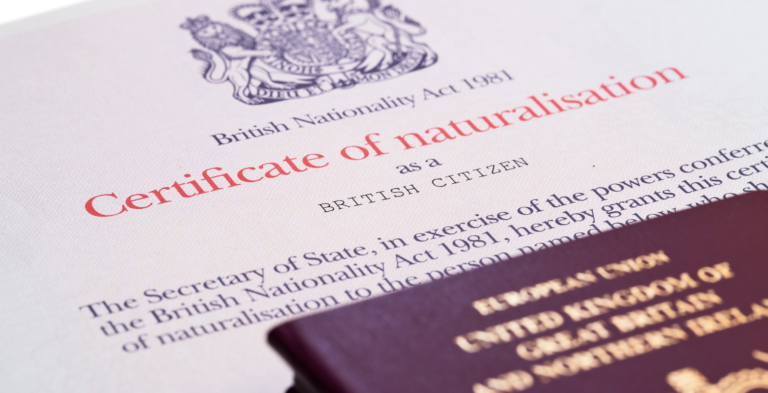
The UK Adult Dependent Relative (ADR) visa is one of the most demanding family routes in the Immigration Rules. It is intended for an adult relative who needs long-term personal care and cannot obtain the required level of care in the country where they currently live, even with practical and financial help from family in the UK.
This is not a general route for adult family reunion. It is a narrow route that applies in serious care cases. The fact that family members in the UK want to look after an older parent themselves, feel worried about their safety, or believe the relative would have a better quality of life in Britain is important in human terms, but it is not enough by itself. The application must prove that the legal requirements are met.
Table of contents
- What is the UK Adult Dependent Relative visa?
- Who can sponsor an adult dependent relative?
- Who can apply?
- Can the first application be made from inside the UK?
- Long-term personal care
- The overseas care test
- The financial requirement
- Accommodation in the UK
- Documents usually needed for an ADR application
- Current fees and processing times
- What happens if the application is granted?
- Common reasons for refusal
- How can we help?
- FAQ
What is the UK Adult Dependent Relative visa?
The Adult Dependent Relative visa is a family route for a person aged 18 or over who depends on a close relative living permanently in the UK because they require long-term personal care. The sponsor must be a qualifying family member in the UK, and the applicant must show that the required level of care cannot be obtained in the applicant’s country of residence.
In practical terms, this route is usually considered where the person abroad:
- is elderly and no longer able to manage daily life safely
- has a serious long-term illness
- has a disability that creates a permanent need for care
- depends on close family because everyday tasks can no longer be carried out without help
The route is most often used for parents and grandparents, but that does not mean it is limited to them. Adult sons, daughters, brothers and sisters may also qualify if they meet the rules.
Who can sponsor an adult dependent relative?
A sponsor must be a qualifying family member in the UK. The current rules allow sponsorship where the UK-based relative falls within one of the following categories:
- British citizen
- Irish citizen
- person settled in the UK
- person with a relevant form of pre-settled status
- person with protection status in the UK
If the sponsor is British, Irish or settled in the UK, a successful applicant will normally be granted an unlimited stay from the outset. If the sponsor has a temporary status, such as a relevant pre-settled status or protection status, the applicant’s permission will normally run in line with that sponsor’s status, and later steps will need to be planned carefully.
Who can apply?
The applicant must be aged 18 or over and must fall within one of the qualifying relationships. In broad terms, the route can apply to:
- parent
- grandparent
- son
- daughter
- brother
- sister
The applicant must also need long-term personal care because of age, illness or disability. In addition, they must prove that the required level of care is not available or not affordable in the country where they currently live, even with the practical and financial support of the sponsor in the UK.
This means that the application is built around four main issues:
- The applicant must be a qualifying adult relative.
- The applicant needs long-term personal care
- The required care must be unavailable or unaffordable in the home country.
- The sponsor must be able to provide adequate maintenance, accommodation and care in the UK without public funds.
If any one of these parts is weak, the application is likely to face problems.
Quick eligibility table
| Requirement | Current position |
| Minimum age | 18 or over |
| Relationship | Parent, grandparent, son, daughter, brother or sister of the sponsor |
| Core care requirement | Long-term personal care needed because of age, illness or disability |
| Overseas care test | The required care must be unavailable or unaffordable in the country of residence |
| Financial test | Sponsor must provide adequate maintenance, accommodation and care without public funds |
| Normal place of first application | Outside the UK |
Can the first application be made from inside the UK?
In most cases, no. The initial Adult Dependent Relative application is normally made from outside the UK.
Families sometimes assume that an elderly parent can enter the UK as a visitor and then apply from within the UK once medical evidence has been collected. That is not the normal structure of this route. An in-country application is generally only available where the person already has, or last had, permission as an Adult Dependent Relative and is extending that stay or moving forward from it.
Long-term personal care
The core question is whether the applicant requires long-term personal care to carry out everyday tasks because of age, illness or disability. The words used in the rules matter. The issue is not whether the person would benefit from support. The issue is whether they genuinely need ongoing personal care to manage daily life.
Examples of daily care needs that often arise in strong cases include:
- washing and personal hygiene
- getting dressed
- preparing meals
- eating safely
- taking medication properly
- moving around the home
- getting in and out of bed
- toileting and continence support
- supervision because of memory loss or confusion
- monitoring due to a serious risk of falls
The stronger the evidence, the easier it is to show that the need is real, long term and serious enough to meet the legal test.
What strong medical evidence usually includes
A carefully prepared application will often include more than one medical document. That is because the decision-maker must understand not only the diagnosis, but also the practical effect of the condition on daily life.
Useful medical evidence may include:
- consultant reports
- treating doctor letters
- hospital discharge records
- medication records
- care assessments
- occupational therapy material
- records showing how the condition has progressed over time
The overseas care test
In many Adult Dependent visa cases, the most difficult issue is not the medical condition. It is whether the family has proved that the required level of care cannot realistically be obtained in the applicant’s country of residence.
Where the case is based on lack of availability, the family should show that proper attempts have been made to understand what care exists locally and whether it is genuinely suitable.
Proving that care is not available
Evidence may include:
- letters or emails from care providers
- statements showing no suitable carers exist in the area
- evidence of long waiting lists
- evidence that residential care is unavailable or unsuitable
- proof that the applicant’s medical needs are too complex for local providers
- evidence explaining why relatives or neighbours in that country cannot reasonably provide the care
Proving that care is not affordable
Sometimes care exists in theory, but the family cannot realistically fund it over time. Where the case is based on affordability, the evidence should be financial and practical, not general.
Useful material may include:
- quotations for home care
- quotations for live-in care
- residential care costs
- records of the applicant’s own income
- records of the sponsor’s current financial support
- evidence showing why the required level of care cannot be sustained
Why family abroad must be addressed
Another issue that often arises is whether someone in the home country could reasonably provide care. If there are relatives nearby, the application should deal with that openly. Silence on this point can be damaging.
If those relatives cannot help, the case should explain why. The reasons may include:
- their own health issues
- living too far away
- full-time work that makes care impossible
- lack of relationship with the applicant
- limited physical ability to provide care
- care needs that require a level of skill they do not have
The financial requirement
The sponsor must show that they can provide:
- adequate maintenance
- adequate accommodation
- the necessary care
All of this must be provided without recourse to public funds.
There is no single fixed annual income figure that works for every case. The test is case-specific. It depends on the size of the household, housing costs, income after tax and National Insurance, and the practical cost of supporting the applicant.
Common financial evidence sources
| Type of evidence | What it usually shows |
| Payslips | Regular employment income |
| Bank statements | Salary payments, savings and available funds |
| Employer letter | Position, salary, contract type and confirmation of employment |
| Pension records | Pension income where relevant |
| Savings evidence | Cash savings under the control of the sponsor or applicant |
| Self-employment records | Business income and ongoing self-employment |
| Rental or dividend records | Non-employment income where relevant |
Accommodation in the UK
The sponsor must also show that the applicant can be housed properly in the UK. The accommodation must be suitable, lawful and not overcrowded.
Useful accommodation evidence may include:
- tenancy agreement
- title documents
- mortgage statement where relevant
- council tax bill
- utility bills
- property inspection report if useful
- written explanation of who lives in the property
The accommodation evidence should fit the care evidence. If the applicant cannot walk safely and the proposed home requires regular use of steep stairs, the case may raise obvious concerns.
Documents usually needed for an ADR application
Every case is different, but most successful applications include evidence across the same core areas.
| Evidence area | Typical documents |
| Identity | Passport, previous passport pages, travel documents |
| Relationship | Birth certificates, family records, household documents, marriage records where relevant |
| Medical condition | Consultant reports, hospital records, doctor letters, care assessments |
| Daily care needs | Documents showing what everyday tasks the applicant cannot manage alone |
| Overseas care evidence | Provider responses, quotations, waiting list evidence, explanations about local care options |
| Sponsor finances | Payslips, bank statements, employer letter, pension or savings evidence |
| Accommodation | Tenancy documents, property records, living arrangement explanation |
| Care plan in the UK | Sponsor statement, family care plan, professional care details if relevant |
Documents not in English or Welsh must be accompanied by a certified translation.
Current fees and processing times
| Stage | Current fee | Usual published processing time |
| ADR application outside the UK | £3,413 | 12 weeks |
| ADR application outside the UK where sponsor has protection status | £424 | 12 weeks |
| ADR application inside the UK | £1,321 | 8 weeks |
| Settlement after ADR route | £3,029 | standard settlement timing applies |
What happens if the application is granted?
If the sponsor is British, Irish or settled in the UK, the successful applicant will usually receive unlimited permission from the start. That means there is normally no later need to extend the visa under this route.
If the sponsor has temporary status, such as relevant pre-settled status or protection status, the applicant’s stay will usually be granted in line with that sponsor’s permission. In that situation, later extension or settlement planning becomes important.
Common reasons for refusal
Common refusal points:
- medical evidence is brief and does not explain daily care needs properly
- the application shows illness but not the legal need for long-term personal care
- the overseas care evidence is weak or too general
- affordability is asserted but not proved with real figures
- local family support abroad is not addressed
- the sponsor’s finances are unclear
- accommodation evidence is incomplete
- translations are missing or poor
- the application is made from the wrong place or in the wrong immigration context
- the case relies on sympathy rather than structured evidence
A useful discipline before submission is to test the bundle against each legal requirement.
How can we help?
Adult Dependent Relative applications are legally strict and evidence-heavy. They combine immigration law, medical material, care planning, financial analysis and family evidence. Even where the facts are strong, the application can fail if the evidence is not structured properly.
Sterling Law can assist with:
- eligibility assessment
- route strategy
- evidence planning
- review of medical material
- analysis of overseas care evidence
- sponsor finance review
- preparation of legal representations
- advice following refusal
Contact us today to start your application and ensure the best possible chance of success.
Frequently Asked Questions
Is the Adult Dependent Relative visa only for elderly parents?
No. It can also apply to grandparents, adult sons, adult daughters, brothers and sisters, provided all the legal requirements are met.
Can a parent qualify just because their child is British or settled in the UK?
No. The parent must show a real need for long-term personal care and must also prove that the required level of care is not available or not affordable in the country where they live.
Does the applicant need to pass an English test?
No. This route does not require an English language test.
Is there a fixed income threshold like the spouse visa route?
No. This route does not use the same fixed minimum income threshold as the spouse visa route. The sponsor must show they can provide adequate maintenance, accommodation and care without public funds.
Can the application be made from inside the UK?
In most cases, the first application must be made from outside the UK. An in-country application is generally only possible where the applicant already has permission on the Adult Dependent Relative route and is extending that stay or moving forward from it.
What evidence matters most?
The strongest applications usually include detailed medical reports, clear evidence of daily care needs, evidence showing that suitable care is not available or not affordable overseas, and financial and accommodation evidence proving that the sponsor can support the applicant properly in the UK.